


Baptism
Topics

- Online Catholic Baptism Preparation for Parents and Godparents
- Catholic Godparent Requirements: Who Can Be a Godparent?
- Infant Baptism Checklist – What You Need to Prepare for Your Child’s Baptism
- Baptism Symbols Explained – Meaning of Water, Oil, Candle, and White Garment
- Online Catholic Baptism Class – Prepare for Infant Baptism from Home
- Choosing Catholic Godparents: A Guide for Baptism and Confirmation
- Baptism Preparation Timeline: A Step-by-Step Guide for Families
- Emergency Baptism Questions: Catholic Answers for Parents and Families
- Catholic Baptism Certificate Requirements: What You Need & How to Request One
- What Happens During Catholic Baptism? A Step-by-Step Guide for Families
- Online Baptism Prep for Parishes – Flexible Catholic Formation for Parents and Godparents
- Baptism Prep Certificate – What It Is and When Your Parish May Require It
Baptism Prep Certificate: What It Is and When Your Parish May Require It
If you are preparing for your child’s Baptism, you may hear your parish ask for a Baptism Prep Certificate before the date can be confirmed. For many parents, that raises several questions right away. What is a baptism prep certificate? Who needs one? Does every parish require it? And what happens if you completed preparation somewhere else?
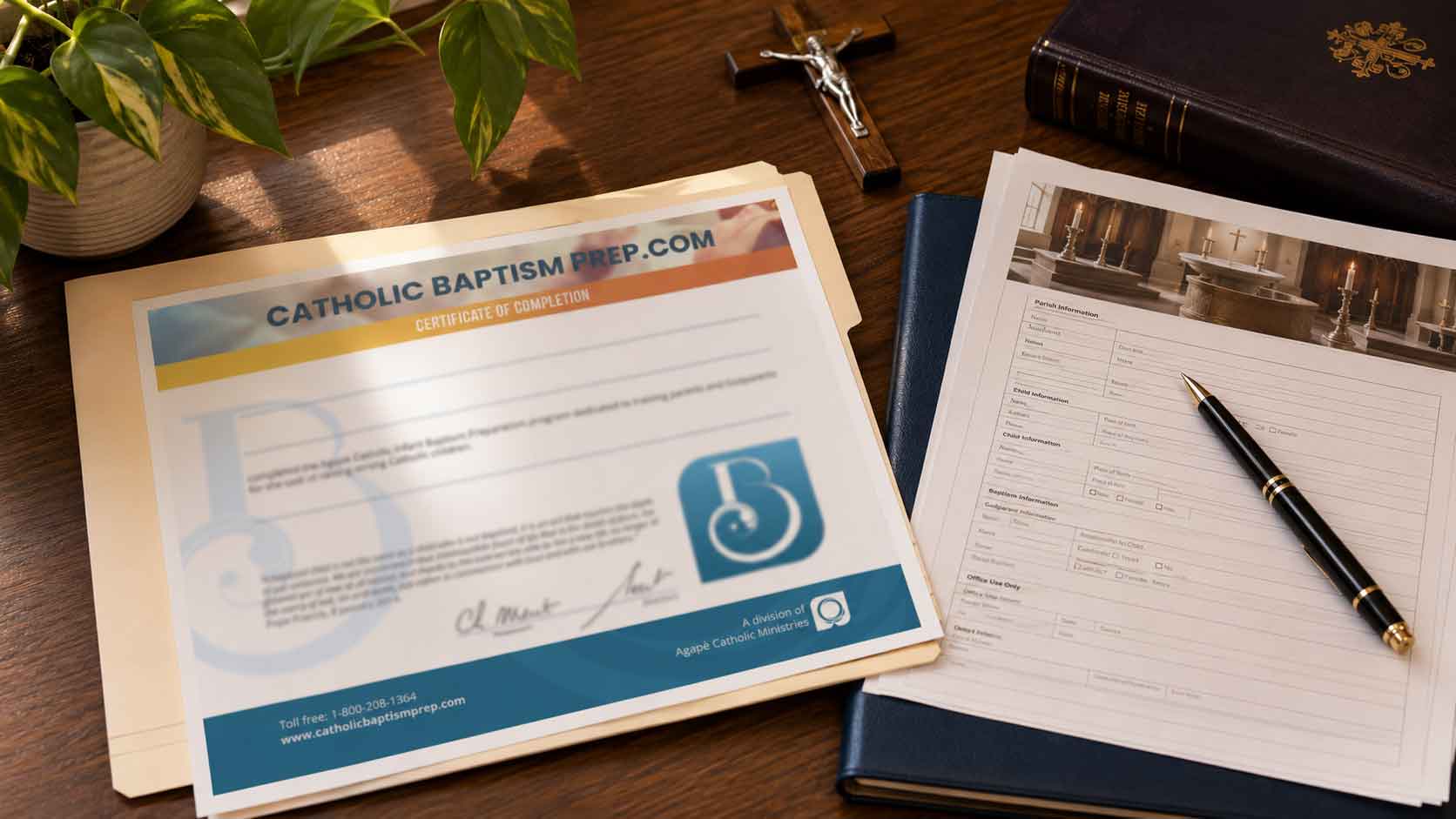
A Baptism Prep Certificate is usually a simple document showing that parents, and sometimes godparents, completed a required baptism preparation class. In many Catholic parishes, this certificate serves as proof that the family received instruction on the meaning of Baptism, the responsibilities of parents and sponsors, and the practical steps connected to the sacrament. While policies vary, understanding how this certificate works can make the preparation process much easier.
What Is a Baptism Prep Certificate?
A Baptism Prep Certificate is not the same as a baptism certificate. A baptism certificate proves that the sacrament of Baptism has already taken place and was recorded in the parish register. A baptism prep certificate, by contrast, usually proves that a parent or family member completed the required instruction before the Baptism.
This distinction matters because many families confuse the two documents. One document comes before the sacrament as part of the preparation process, while the other comes after the sacrament as an official sacramental record. If a parish asks for proof of class attendance, they are generally asking for preparation documentation, not the final baptismal record.
In some parishes, the certificate may be formal and printed. In others, it may simply be a signed form, an email confirmation, or a class attendance record submitted by the parish where the preparation was completed.
Why Parishes Require It
Catholic Baptism is more than a family celebration or naming ceremony. The Church expects parents to understand the spiritual meaning of the sacrament and to be ready to raise their child in the Catholic faith. That is why many parishes require some type of baptism preparation before the sacrament is scheduled.
A Baptism Prep Certificate helps the parish confirm that the family completed that step. It also gives the parish a consistent way to track readiness, especially when multiple families are preparing at the same time or when parents attend a class outside the parish.
For parish staff, this document helps reduce confusion. It shows that a class has been completed, that a family has received the required formation, and that one of the important preparation steps is already in place before the baptism date arrives.
Who Usually Needs a Baptism Prep Certificate?
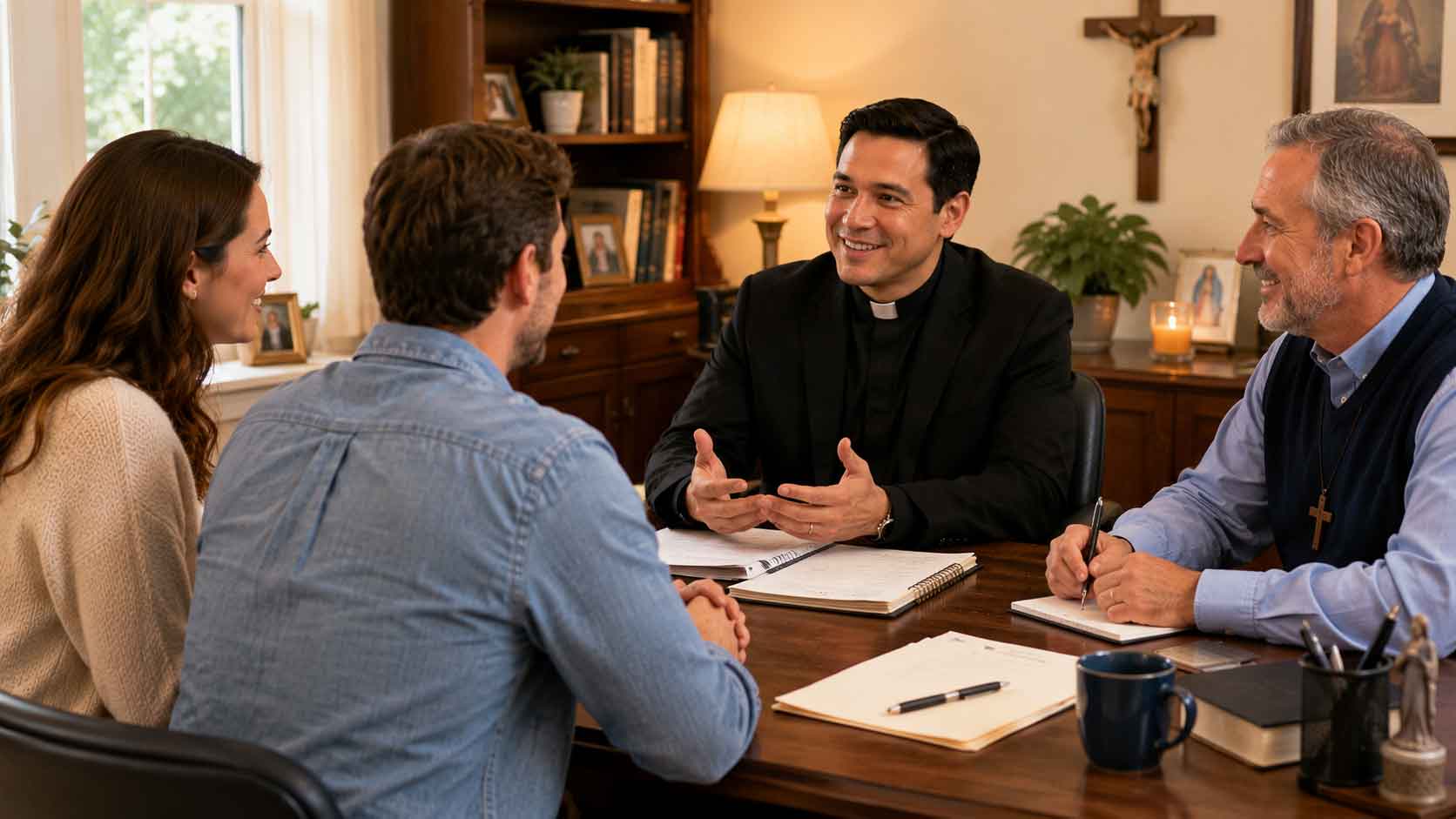
In most parishes, the certificate is requested from the parents, especially if they are presenting their first child for Baptism. Some churches require only one parent to attend the preparation session, while others ask both parents to participate if possible.
Some parishes also ask godparents to complete baptism preparation or at least review sponsor responsibilities. If that is the case, the parish may request additional proof of completion from the godparents, especially if they live in another parish or diocese.
Not every parish has the same policy. Some parishes waive the class if the parents completed it recently for another child. Others require a new class if too much time has passed. That is why it is always best to check local parish instructions early in the process.
What Information Is Usually on the Certificate?
A baptism prep certificate is usually straightforward. It may include:
- The name of the parent or participant.
- The name of the parish or program offering the class.
- The date the class was completed.
- The title of the course or preparation session.
- A signature, seal, or name of the parish representative or course provider.
In some cases, the certificate may include the child’s name or expected baptism date, but not always. If the preparation was done online, the certificate may be downloadable as a PDF or sent by email after the course is completed.
Some parishes accept the certificate directly from the family. Others may prefer that the certificate be sent from the parish or provider that offered the class. It is a good idea to ask what form of proof your parish wants before you assume that a simple printout is enough.
Can You Use a Certificate From Another Parish?
In many cases, yes. If you attended baptism preparation at another Catholic parish, diocese, or approved Catholic provider, your parish may accept that certificate as long as it clearly shows completion. This is especially helpful for families who recently moved, who travel often, or who found a class time that worked better at another parish.
Online preparation certificates are also accepted in many places, but not automatically everywhere. Some dioceses and parishes are happy to accept approved online programs, while others want parents to attend an in-person or parish-specific session. The safest approach is to ask your parish before registering for a class somewhere else.
If your parish accepts outside preparation, submit the certificate early. That gives staff enough time to review it and let you know if any additional step is required.
How To Get a Baptism Prep Certificate
The process is usually simple. First, contact your parish and ask what type of baptism preparation they require. Then register for the class they recommend or approve. After you complete the course, keep a copy of the certificate or confirmation for your records.
If the class is offered in person, the certificate may be handed to you at the end of the session. If the course is online, it may be available immediately as a download or sent by email after completion. Either way, save both a digital and printed copy if possible.
If you finish the class but do not receive proof of completion, contact the parish office or course provider promptly. It is much easier to resolve this early than to discover missing paperwork right before the Baptism date.
When To Submit the Certificate
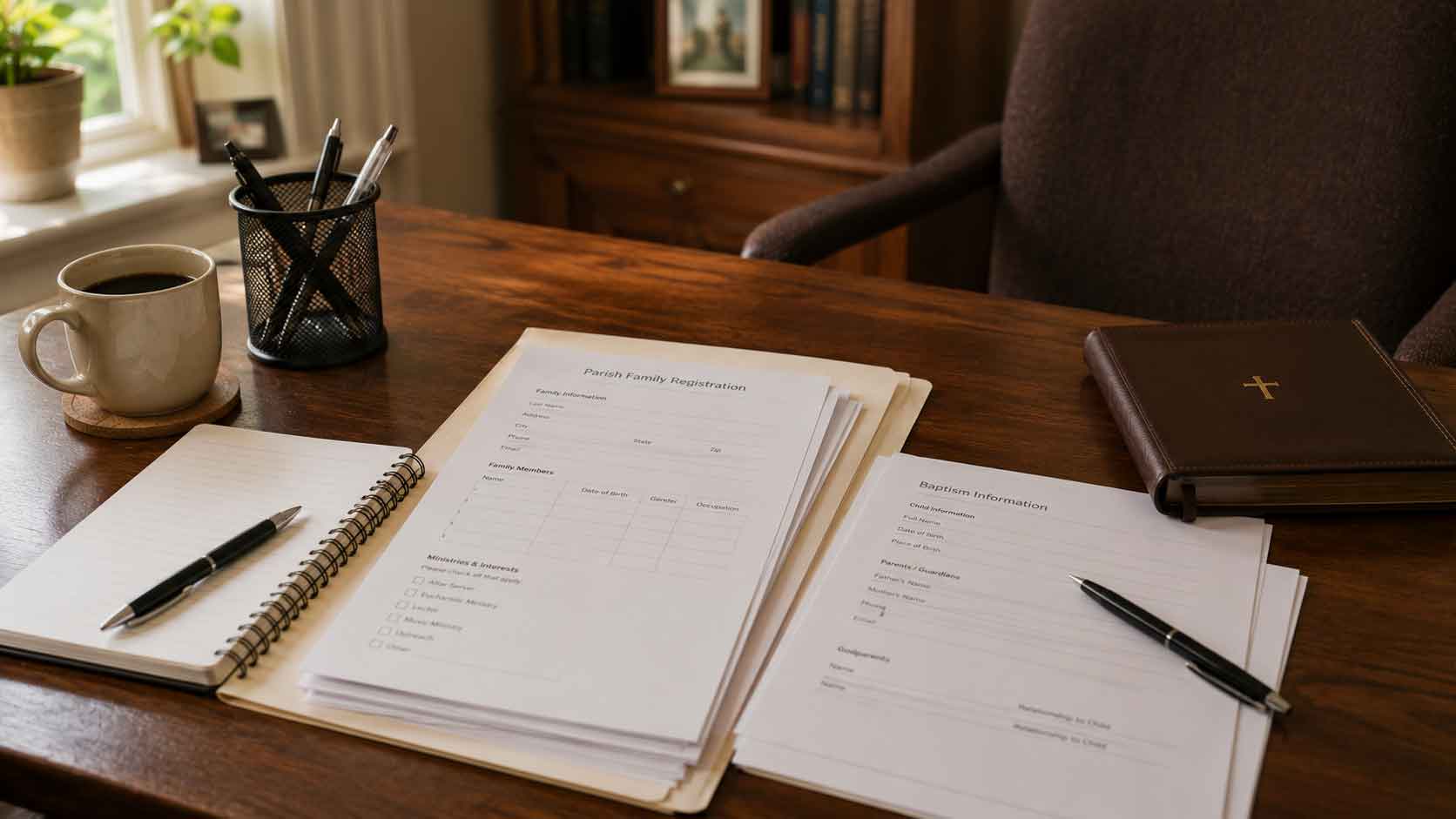
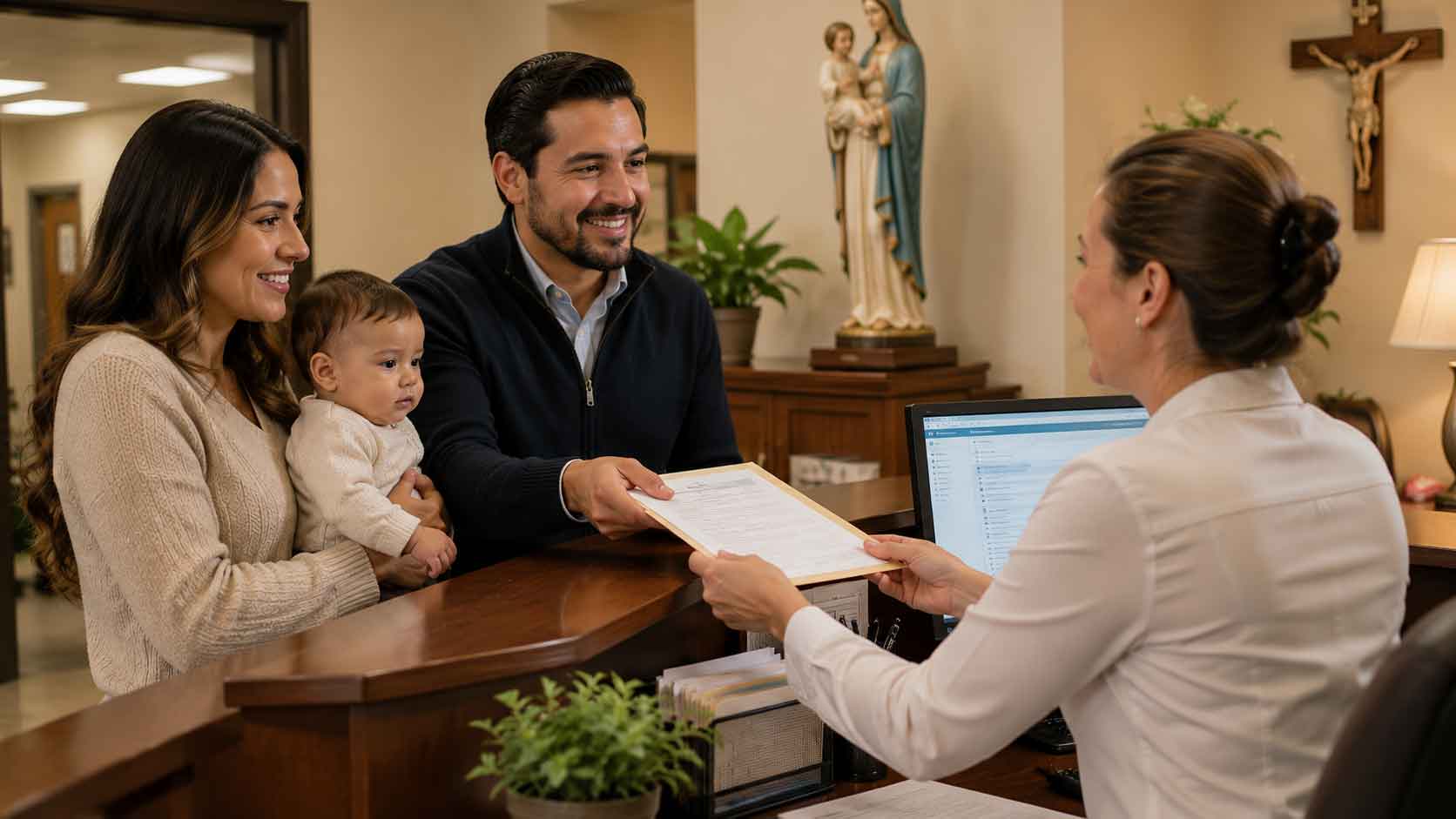
The best time to submit a Baptism Prep Certificate is as soon as you receive it. Some parishes will not fully confirm the Baptism date until they have the certificate, birth certificate, registration form, and any required godparent paperwork. Waiting until the last minute can delay the process.
If your parish has a deadline, be sure to follow it closely. Even if the parish office is welcoming and flexible, sacramental scheduling often involves multiple families, priests, deacons, and parish records. Submitting documents early helps everything move more smoothly.
It is also wise to ask whether the parish prefers email, paper copies, or an upload through an online form. A correct submission method is just as important as having the certificate itself.
What If You Lost the Certificate?
If you misplaced your Baptism Prep Certificate, do not panic. In most cases, the parish or program that issued it can provide another copy or confirm your attendance. Start by contacting the office where you took the class and give them your name, the approximate date, and any other details that may help locate the record.
Some parishes are willing to accept an email or letter confirming that you completed the class, even if the original certificate is no longer available. Others may ask you to attend a new session if the original class took place too long ago. Again, local policy matters, so it is best to ask directly.
Keeping a digital copy in your email or family files is one of the easiest ways to avoid this problem in the future.
Helpful Tips for Families and Parishes
For families, the best approach is simple: ask your parish first, complete preparation early, save your certificate, and submit it right away. That reduces stress and gives you more time to focus on the spiritual beauty of your child’s Baptism.
A Baptism Prep Certificate may seem like a small detail, but it often plays an important role in helping the whole preparation process move forward smoothly. When everyone understands what it is and how it works, the path to Baptism becomes much easier for families and parish staff alike.