


Baptism
Topics

- Online Catholic Baptism Preparation for Parents and Godparents
- Catholic Godparent Requirements: Who Can Be a Godparent?
- Infant Baptism Checklist – What You Need to Prepare for Your Child’s Baptism
- Baptism Symbols Explained – Meaning of Water, Oil, Candle, and White Garment
- Online Catholic Baptism Class – Prepare for Infant Baptism from Home
- Choosing Catholic Godparents: A Guide for Baptism and Confirmation
- Baptism Preparation Timeline: A Step-by-Step Guide for Families
- Emergency Baptism Questions: Catholic Answers for Parents and Families
- Catholic Baptism Certificate Requirements: What You Need & How to Request One
- What Happens During Catholic Baptism? A Step-by-Step Guide for Families
- Online Baptism Prep for Parishes – Flexible Catholic Formation for Parents and Godparents
- Baptism Prep Certificate – What It Is and When Your Parish May Require It
Baptism Symbols Explained – Meaning of Water, Oil, Candle, and White Garment
The Catholic Baptism ceremony is rich with visible signs and sacred objects that carry deep spiritual meaning. From the water poured over the head to the flame of the baptismal candle, each symbol helps the Church teach that Baptism is not just a ritual, but an encounter with Christ and the Holy Spirit. Understanding these symbols can help families prepare for the sacrament and appreciate it more deeply on the day of the ceremony.
This page explains the main symbols used in Catholic Baptism—water, the baptismal candle, the white garment, sacred oils, and several other related signs—so parents, godparents, and catechists can speak about them with confidence and share their meaning with children over the years.
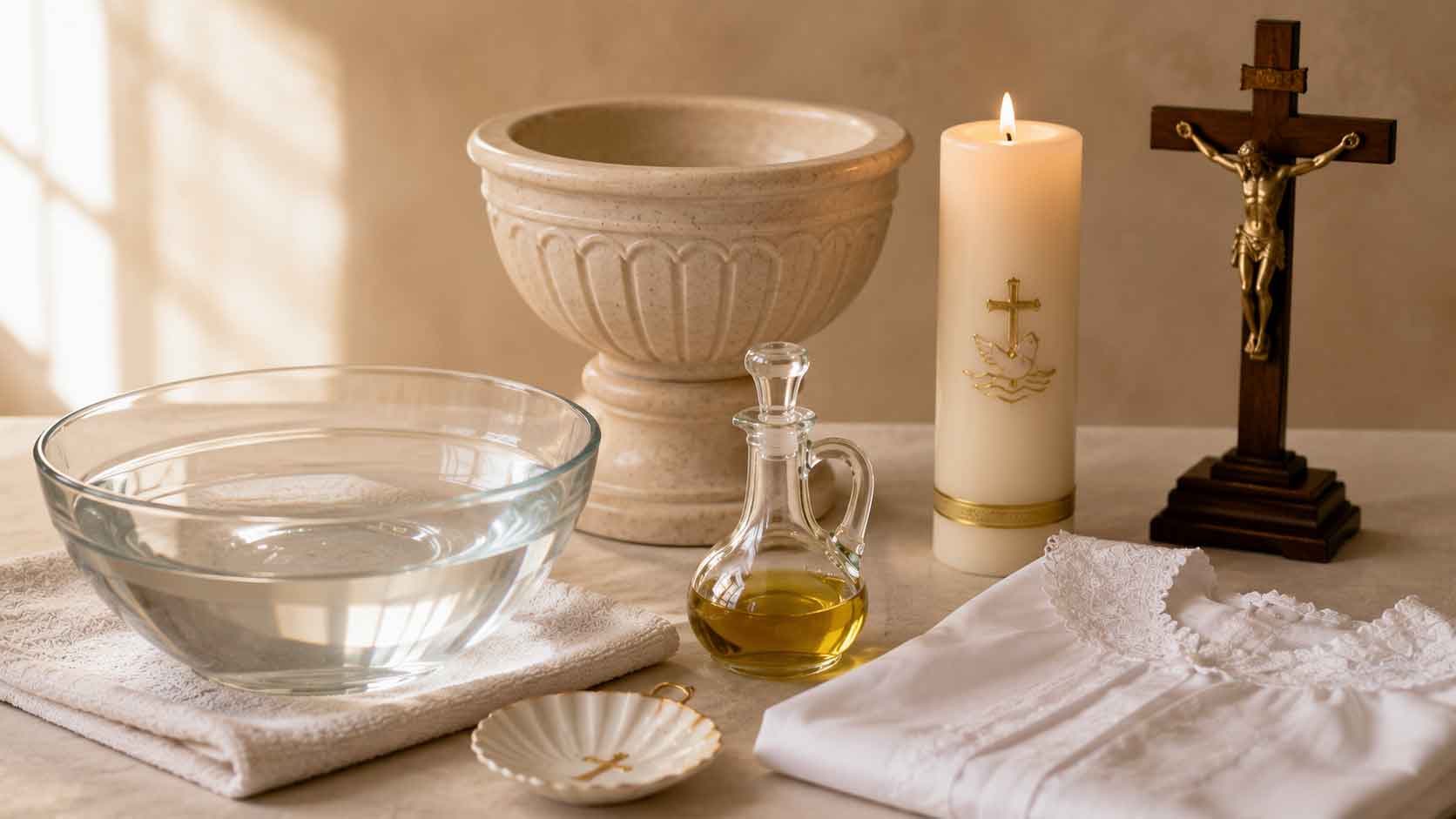
Water – The Primary Symbol of Baptism
Water is the central sign of Baptism. The celebrant pours water three times over the head of the person being baptized and says, “I baptize you in the name of the Father, and of the Son, and of the Holy Spirit.” This water represents cleansing from sin, especially original sin, and the beginning of a new life in Christ.
In the Bible, water is used repeatedly as a sign of life, power, and deliverance—such as the waters of the flood, the Red Sea, and the Jordan River. In Baptism, water symbolizes both the washing away of sin and the gift of divine life that flows from Christ. The Church understands that through this visible sign, the person really dies to their old self with Christ and rises with him to new life.
Many parishes use a baptismal font—a basin or pool close to the entrance of the church—to make the symbolism of water even more visible. The font reminds the whole community that everyone who enters the Church has passed through the waters of Baptism and is now a member of the Body of Christ.
The Baptismal Candle – Light of Christ
The baptismal candle is lit from the Paschal Candle, which stands near the altar and represents the Risen Christ. The priest or deacon, the parents, or the godparents often light the child’s candle at the Baptism and hand it to the family. This candle is a powerful symbol of Christ as the light of the world and of the faith that the child is called to live.
The light of the candle also represents the flame of faith that should burn in the child’s life: in prayer, in participation at Mass, in service to others, and in the choices they make as they grow. Many families keep this candle for years, using it again on the child’s birthday, feast days, or First Communion as a visible reminder of their baptismal identity.
In some traditions, the candle is associated with the Paschal mystery—Christ’s death and resurrection. By lighting the child’s candle from the Paschal Candle, the Church shows that the light of the Resurrection now shines in this new member of the Church.
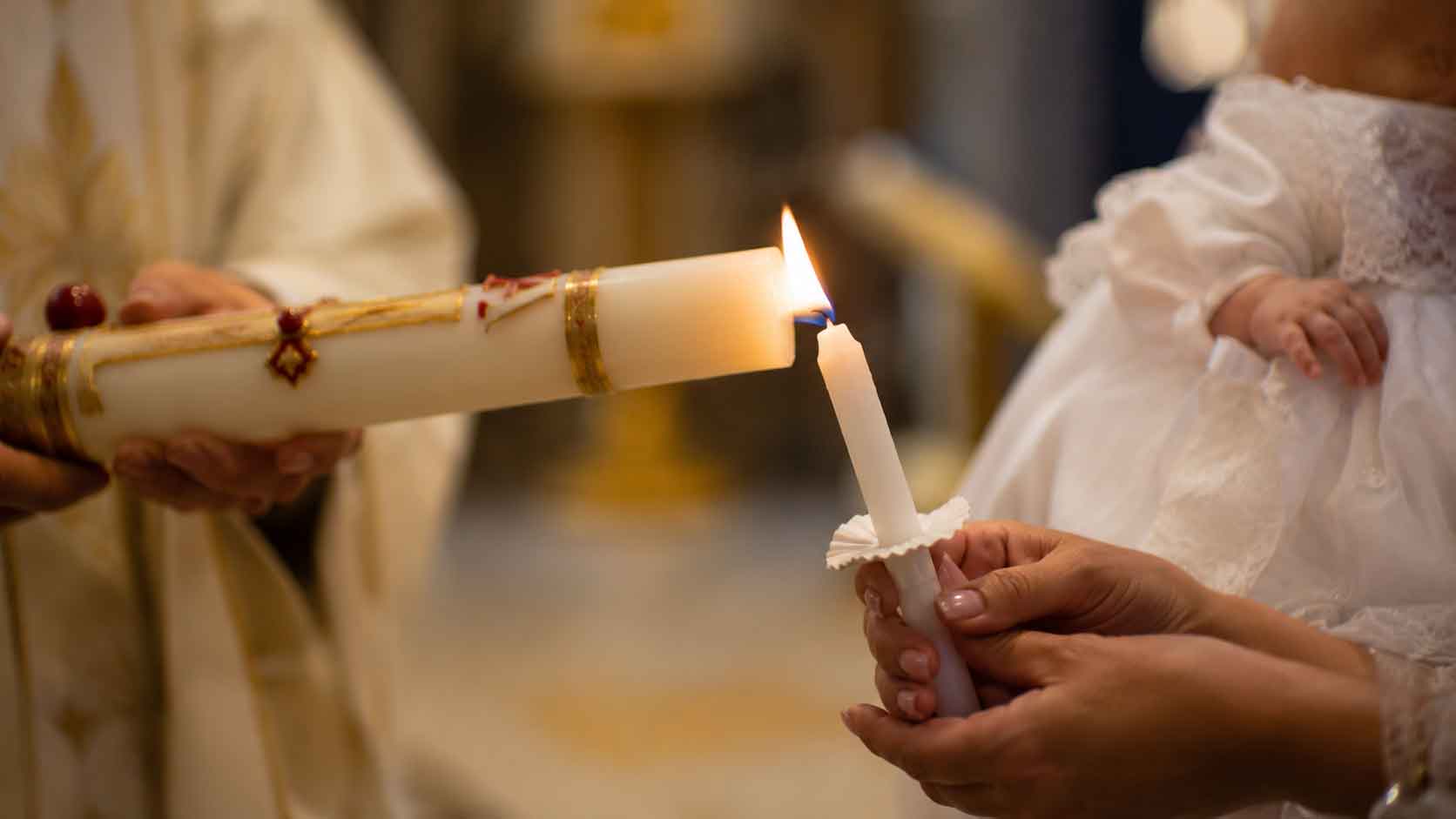
The White Garment – Clothed in Christ
After the water, the priest or deacon may place a white garment over the child or adult. The white garment is a simple but rich symbol. It points to the idea that the newly baptized “put on Christ,” as Saint Paul says, and begin a life marked by Christian dignity and purity.
White is associated with joy, holiness, and new life. In the Church’s teaching, the white garment suggests that the person has been freed from the darkness of sin and now shares in the life of the Resurrected Christ. It also recalls the white robes of the saints in Revelation, who have been washed in the blood of the Lamb.
Parishes and families sometimes use this moment to explain that the child is now a member of the Church and is called to walk in the light of Christ every day. The garment may be a special Baptismal robe, a simple white cloth from the parish, or, especially for older children or adults, a white garment they choose themselves.
Sacred Oils – Chrism and the Oil of Catechumens
The Church uses two special oils in the Baptism ceremony: the Oil of Catechumens and the Sacred Chrism. The Oil of Catechumens is often used before the water is poured, as a sign of strengthening and healing. It reminds everyone that the person being baptized needs God’s help to reject sin and grow in the new life of grace.
The Sacred Chrism is a perfumed oil blessed by the bishop during Holy Week. After the Baptism, the priest or deacon anoints the crown of the head with Chrism. This anointing symbolizes the gift of the Holy Spirit, the child’s share in the priestly, prophetic, and royal mission of Christ, and their permanent belonging to the Church.
Because the oil is made by the bishop and distributed to parishes, Chrism also connects the newly baptized to the wider Church and to the apostolic ministry of the bishops. The lingering fragrance can be a gentle reminder of the day’s grace for years to come.
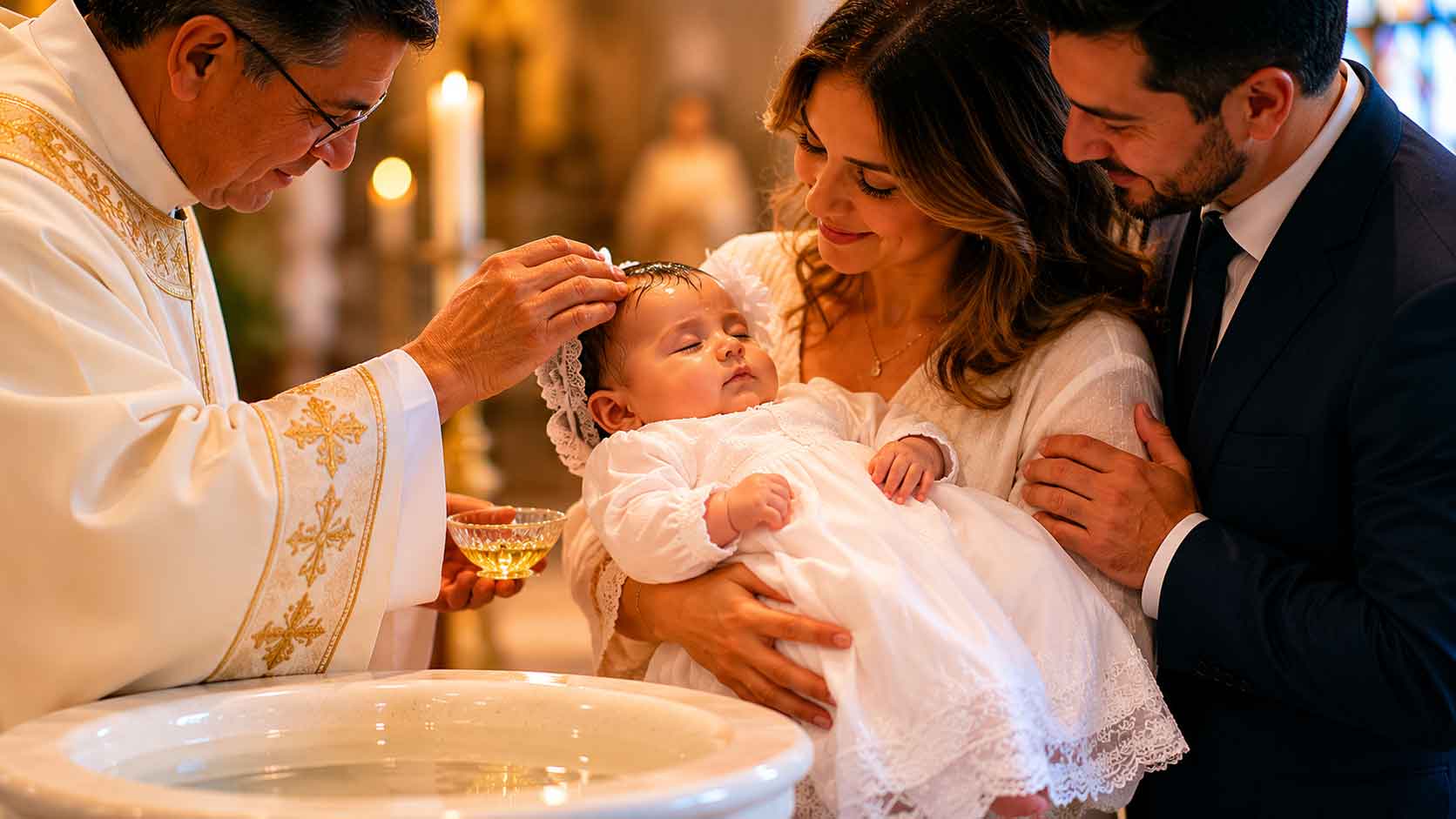
The Sign of the Cross – Marked with Christ
At the beginning of the Baptism rite, the priest or deacon often makes the Sign of the Cross on the forehead of the child or adult. The parents and godparents may also trace the cross on the child’s forehead. The cross is the most basic Christian symbol and it marks the person as belonging to Christ.
The Sign of the Cross recalls Christ’s saving death on the Cross and his victory over sin and death. It also reminds the family that the Christian life is not without suffering, but that Christ walks with them through every trial. Over the years, the child will learn to make the Sign of the Cross at Mass, before prayer, and in times of temptation.
In this simple sign, the Church weaves together the past (Christ’s crucifixion), the present (the person’s new life in grace), and the future (their ongoing journey of faith). It is a visible reminder that the child is claimed by Christ and called to follow the way of the Cross.
Additional Baptism Symbols and Signs
Several other elements enrich the meaning of Baptism:
- The Paschal Candle: The large candle blessed at the Easter Vigil. The baptismal candle is lit from it, showing that the infant or child shares in the light of the Resurrection.
- The Baptismal Font: The basin or pool where water is used. It often stands near the church entrance, reminding everyone that Baptism is the doorway into the Church.
- The Shell or Pouring Vessel: Sometimes a shell or ladle is used to pour the water. Shells are associated with Saint James and the idea of carrying the waters of life to others. The three drops often shown on a shell also point to the Trinity.
- The Bible and Readings: Scripture passages proclaim the same Jesus who welcomed children, healed the sick, and taught the way of the Kingdom. The words of the Bible unfold the same mystery that the symbols make visible.
Together, these signs form a kind of “grammar of grace,” where every object, gesture, and word points to what God is doing in the hearts of the baptized.
Why Symbols Matter in Baptism
The Church uses symbols because human beings learn through both words and visible signs. A child may not fully understand the theology of Baptism, but they can feel the water, see the candle, and wear the white garment. These tangible elements help them grasp the reality of a new life in Christ in a way that pure abstract teaching cannot.
At the same time, these symbols are not empty signs. The Church teaches that in the sacrament, grace truly enters the person through the use of these signs. The water cleanses, the oil strengthens, the candle enlightens, and the white garment clothes the soul in the dignity of a child of God.
Throughout a person’s life, the images of water, light, white cloth, and anointing can be recalled and explained again at key moments—when preparing for First Communion, Confirmation, or marriage. This continuity helps the child understand that Baptism is not a one‑time event, but the beginning of a lifelong journey in the Church.
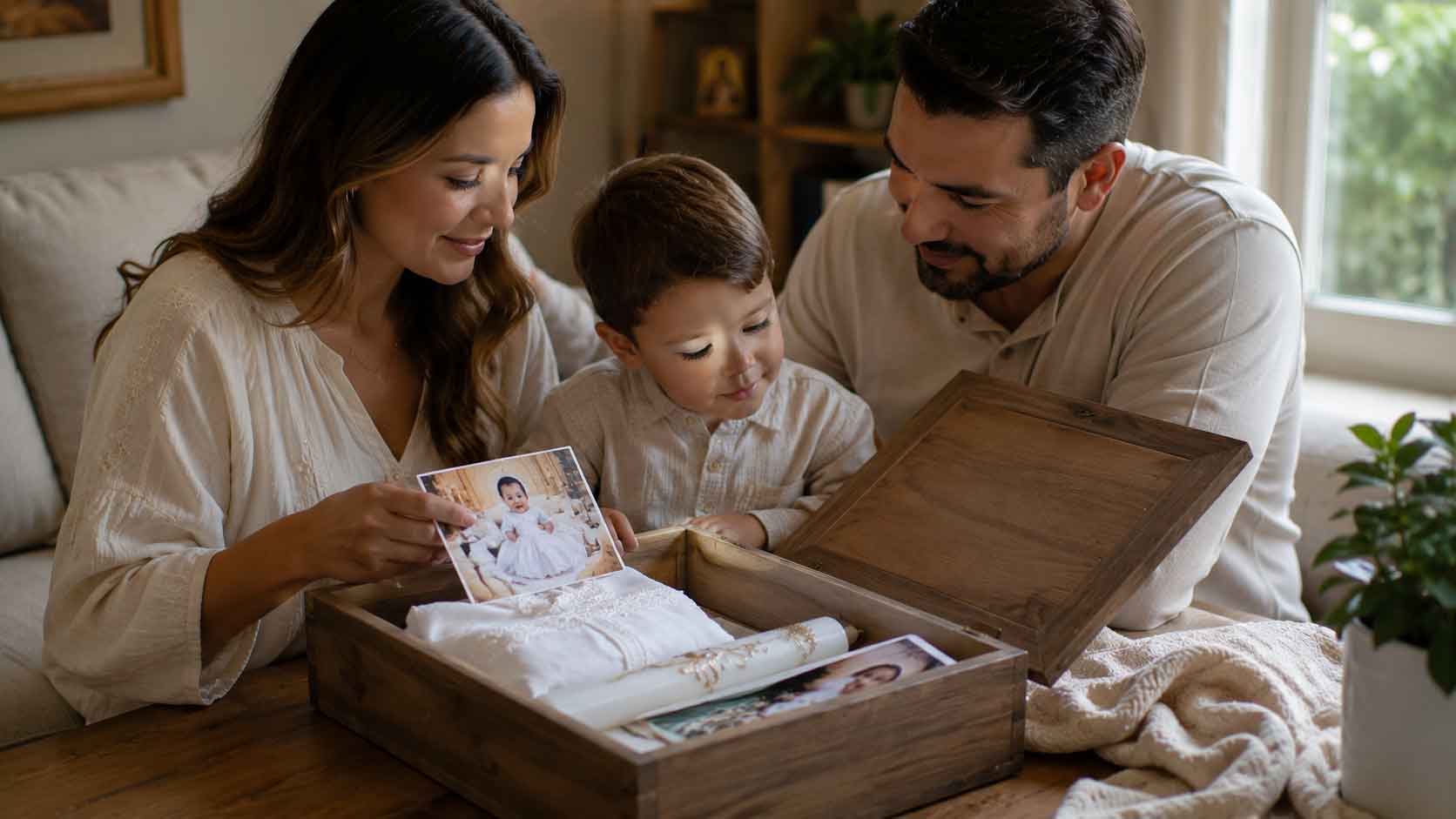
How to Teach These Symbols to Children
Parents and catechists can deepen a child’s understanding of Baptism long after the ceremony by:
- Using the baptismal candle again on feast days, birthday prayers, or when the child wants to pray for someone.
- Keeping the white garment or a photo of it as a visual reminder of the day the child was “clothed in Christ.”
- Talking about the water in the baptismal font whenever passing by it, explaining that everyone in the Church has passed through those waters.
- Repeating the phrase “You are marked with the Sign of the Cross” when crossing the child’s forehead at bedtime or before a big event.
A simple phrase such as “Water for new life, oil for strength, candle for light, and white garment for purity” can become a short rhyme or memory aid that children enjoy. As they grow, this language can gradually be expanded into fuller explanations of grace, the Holy Spirit, and the Church.