


Baptism
Topics

- Online Catholic Baptism Preparation for Parents and Godparents
- Catholic Godparent Requirements: Who Can Be a Godparent?
- Infant Baptism Checklist – What You Need to Prepare for Your Child’s Baptism
- Baptism Symbols Explained – Meaning of Water, Oil, Candle, and White Garment
- Online Catholic Baptism Class – Prepare for Infant Baptism from Home
- Choosing Catholic Godparents: A Guide for Baptism and Confirmation
- Baptism Preparation Timeline: A Step-by-Step Guide for Families
- Emergency Baptism Questions: Catholic Answers for Parents and Families
- Catholic Baptism Certificate Requirements: What You Need & How to Request One
- What Happens During Catholic Baptism? A Step-by-Step Guide for Families
- Online Baptism Prep for Parishes – Flexible Catholic Formation for Parents and Godparents
- Baptism Prep Certificate – What It Is and When Your Parish May Require It
Emergency Baptism Questions: Catholic Answers for Parents and Families
Emergency baptism questions often come up during frightening and uncertain moments. Parents, grandparents, nurses, godparents, and other caregivers may suddenly need to know what the Catholic Church teaches, who can perform an emergency baptism, what words must be said, and what happens afterward. In a moment of crisis, clear and simple guidance matters.
In the Catholic Church, Baptism is so important that in danger of death it may be administered by a person who is not a priest or deacon, provided the person has the right intention and uses real water with the proper words. This page answers the most common emergency baptism questions in a practical way so families can understand what to do and how to follow up with the parish later.
What Is an Emergency Baptism?
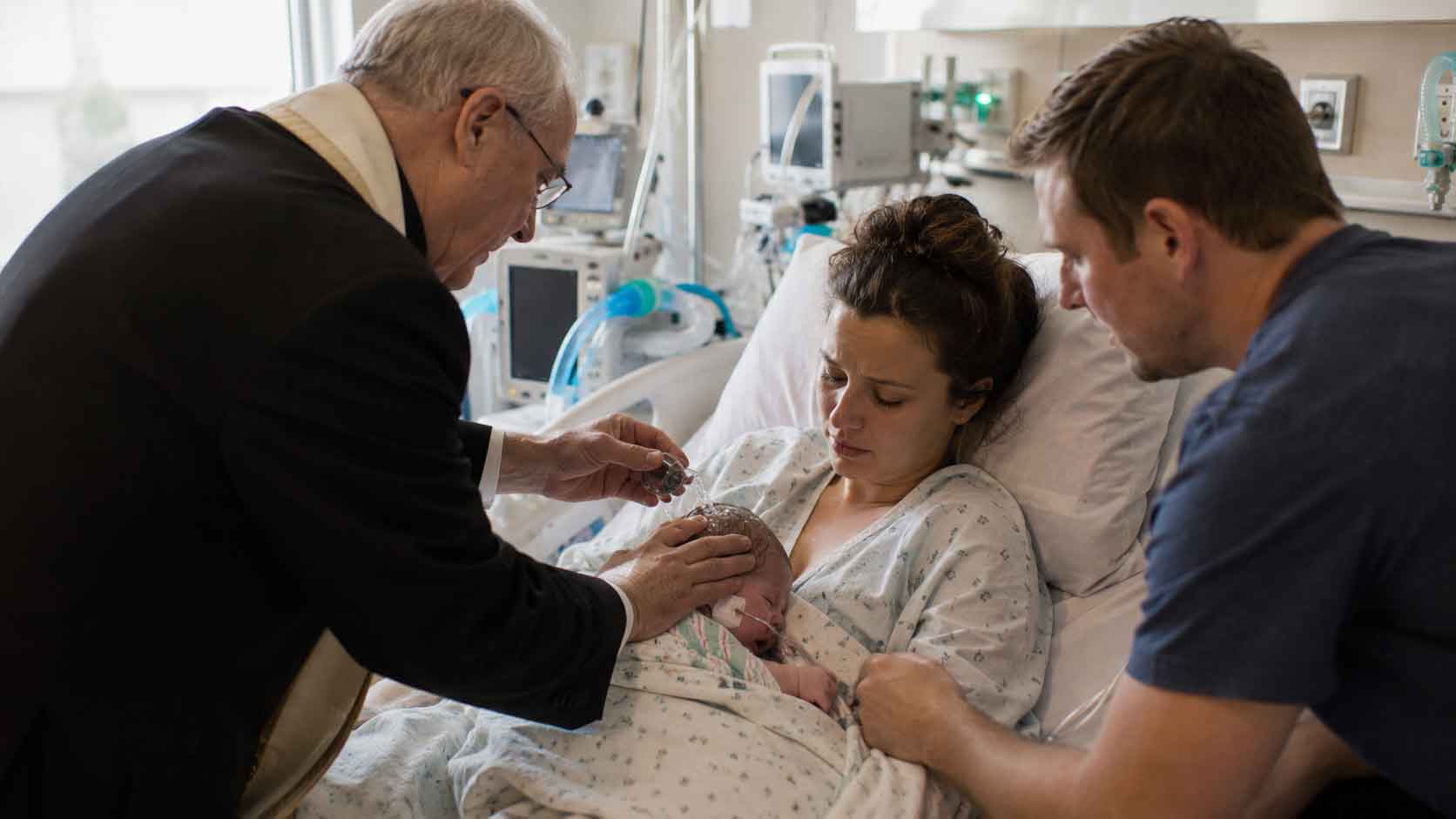
An emergency baptism is a Baptism performed when a person is in danger of death and an ordained minister is not available in time. This is most often discussed in connection with infants in hospitals, difficult births, or medical emergencies, but it can also apply to older children or adults who are unbaptized and near death.
Under normal circumstances, Baptism is celebrated by a priest or deacon within the life of the parish. But the Church also recognizes that a true emergency can require immediate action. In those cases, the goal is not to replace the ordinary sacramental life of the Church, but to ensure that the person can receive Baptism without delay when death may be near.
Who Can Perform an Emergency Baptism?
This is one of the most common emergency baptism questions. In an actual emergency, any person can baptize if they intend to do what the Church does when baptizing. That means the baptizer does not need to be a priest, deacon, religious sister, or even a Catholic.
In practical terms, that could be a parent, grandparent, doctor, nurse, friend, or another bystander. What matters is not the person’s role or title, but whether they use real water, say the correct words, and intend to perform Christian Baptism as the Church understands it.
If a priest or deacon is available and can arrive in time, they should be called first. Emergency baptism is meant for cases of necessity, not convenience. But when time is short and danger is real, the Church allows this extraordinary action out of pastoral care and urgency.
What Do You Need for an Emergency Baptism?
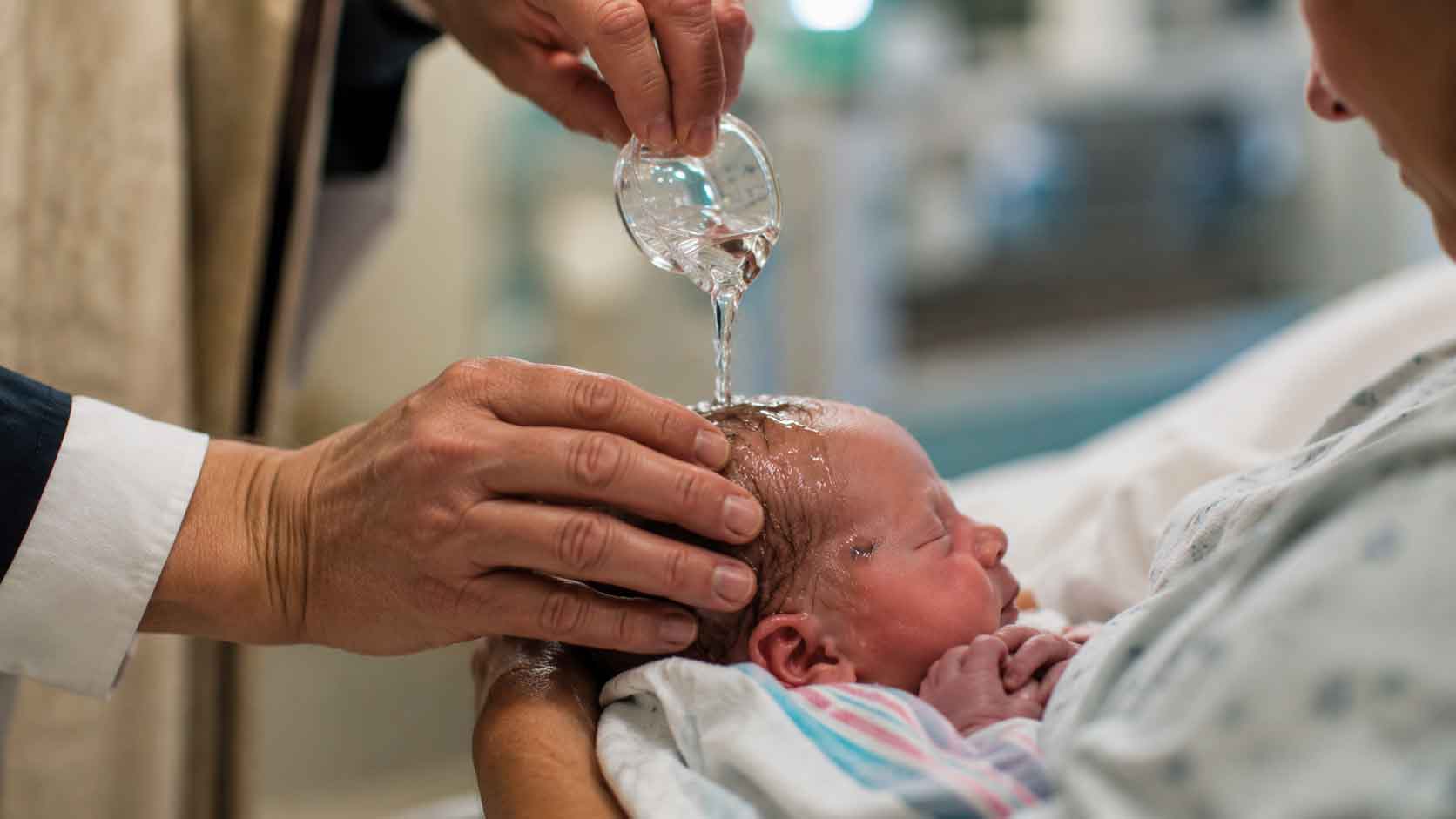
The essentials are very simple. You need:
- The unbaptized person.
- Real water.
- The correct Trinitarian formula.
- The intention to do what the Church does in Baptism.
The water should be poured over the head if possible. If a person’s condition makes that difficult, the water still needs to be applied in a way that is truly part of the act of Baptism. The words must be said clearly and correctly while the water is being poured.
The normal formula is: “N., I baptize you in the name of the Father, and of the Son, and of the Holy Spirit.” It is best to use the person’s given name if known, though the validity of the baptism depends on the water, the Trinitarian words, and the right intention.
How Is an Emergency Baptism Performed?
In a true emergency, keep it simple and calm. If possible, one or two witnesses should be present. Then:
- Use real water.
- Pour the water over the person’s head.
- At the same time say: “N., I baptize you in the name of the Father, and of the Son, and of the Holy Spirit.”
Many Catholics are taught to pour the water three times, once at each divine name. That is a good and common practice. The important point is that the pouring of real water and the full Trinitarian formula happen together as one act of Baptism.
In an emergency there is no need to add extra prayers, oils, candles, or formal ceremony. Those beautiful parts belong to the fuller rite, but they are not required for validity in a case of necessity.
Common Emergency Baptism Questions
Can a nurse baptize a baby in danger of death? Yes. If the baby is unbaptized, in danger of death, and no ordained minister is available in time, a nurse may baptize using real water and the correct formula.
Can a parent baptize their own child in an emergency? Yes. In a real emergency, a parent may baptize their child if necessary. This is one of the most common situations in Catholic teaching about emergency Baptism.
Does the person baptizing have to be Catholic? No. In danger of death, any person may baptize if they intend to do what the Church does and use the proper matter and form.
Do you need holy water? No. Holy water is not required. Ordinary real water is enough.
Can you baptize someone who is already baptized? No. Baptism can only be received once. If there is real doubt about whether a valid Baptism already happened, that question should be brought to a priest as soon as possible.
What if the person survives? If the emergency Baptism was valid, the person is already baptized and should not be baptized again. The family should contact the parish so the baptism can be recorded and any remaining ceremonial rites can be supplied if appropriate.
What Should You Do After an Emergency Baptism?
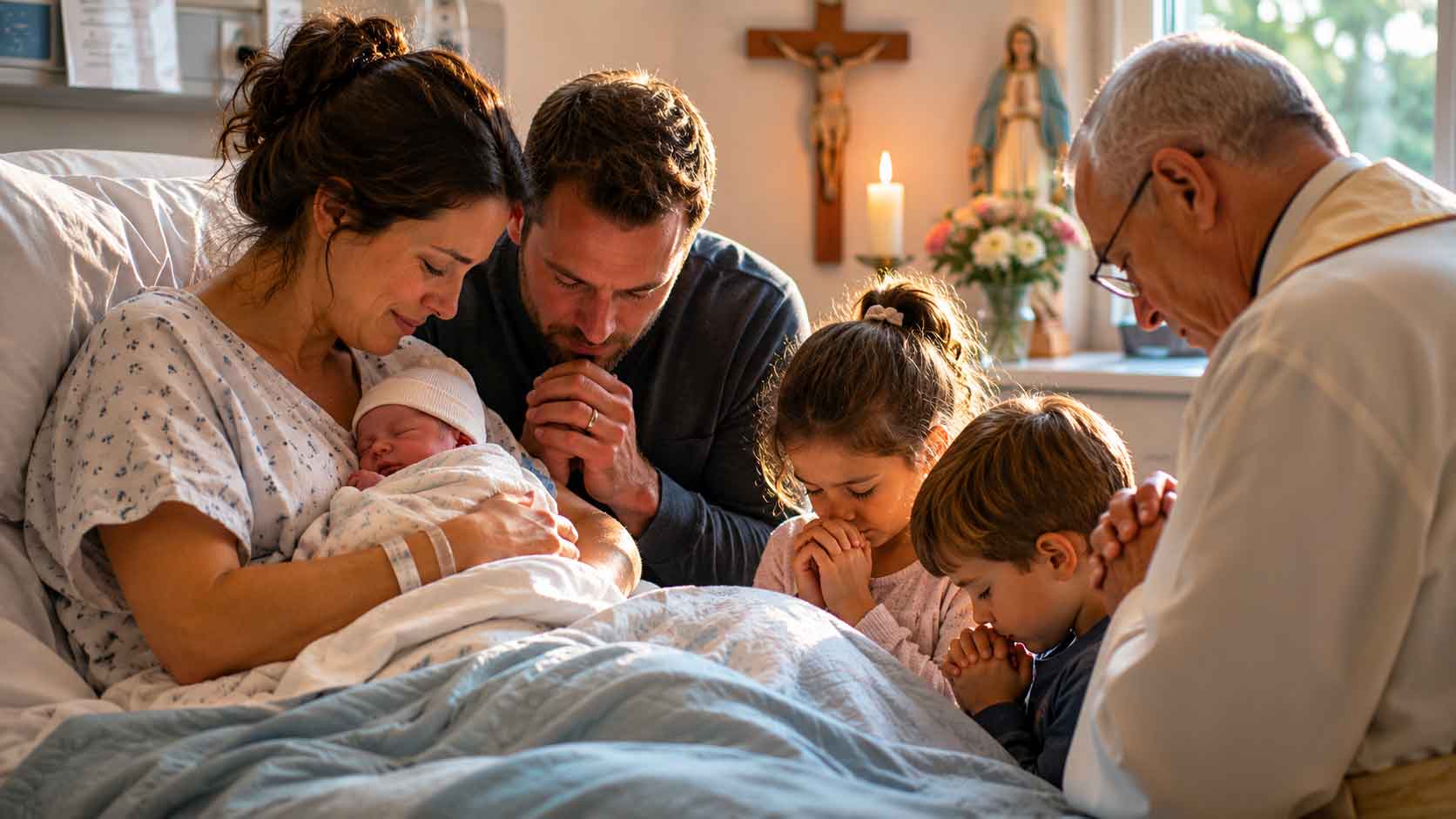
After the emergency has passed, contact a Catholic parish as soon as possible. Tell the priest or parish office exactly what happened, including:
- The name of the person baptized.
- The date, time, and place of the Baptism.
- Who performed the Baptism.
- What words were said.
- Whether any witnesses were present.
This step is very important because the Church needs to record the Baptism properly. If the baptized person is an infant or child who survives, the parish may later celebrate the additional rites that were omitted in the emergency, such as anointings and ceremonial prayers. These do not repeat Baptism; they complete the public liturgical expression of what has already taken place.
Questions Families Often Worry About
Families often worry about whether they “did it right.” That concern is understandable, especially in a hospital room or other stressful setting. The Church’s guidance is actually very simple: real water, the Trinitarian formula, and the intention to do what the Church does.
Some also worry about whether the setting was too informal or whether the person baptizing was “qualified enough.” In emergencies, the Church deliberately keeps the requirements basic so that fear, confusion, or lack of ceremony does not prevent Baptism when time is short.
Another common concern is whether an emergency Baptism somehow takes away from a later parish celebration. It does not. If the child lives, the family can still gather with the Church community, celebrate the supplied rites, and mark the grace of Baptism in a visible and prayerful way.
When Should You Call a Priest?
The answer is simple: as soon as possible. If there is time, contact a priest or deacon immediately and ask whether they can come. In a hospital setting, staff may already know how to reach the chaplain or local parish.
If no priest can arrive in time and the danger is serious, then emergency Baptism should not be delayed. Afterward, even if the Baptism has already taken place, a priest should still be notified so the Church can provide pastoral care, record the sacrament, and guide the family through the next steps.
A Calm and Clear Summary
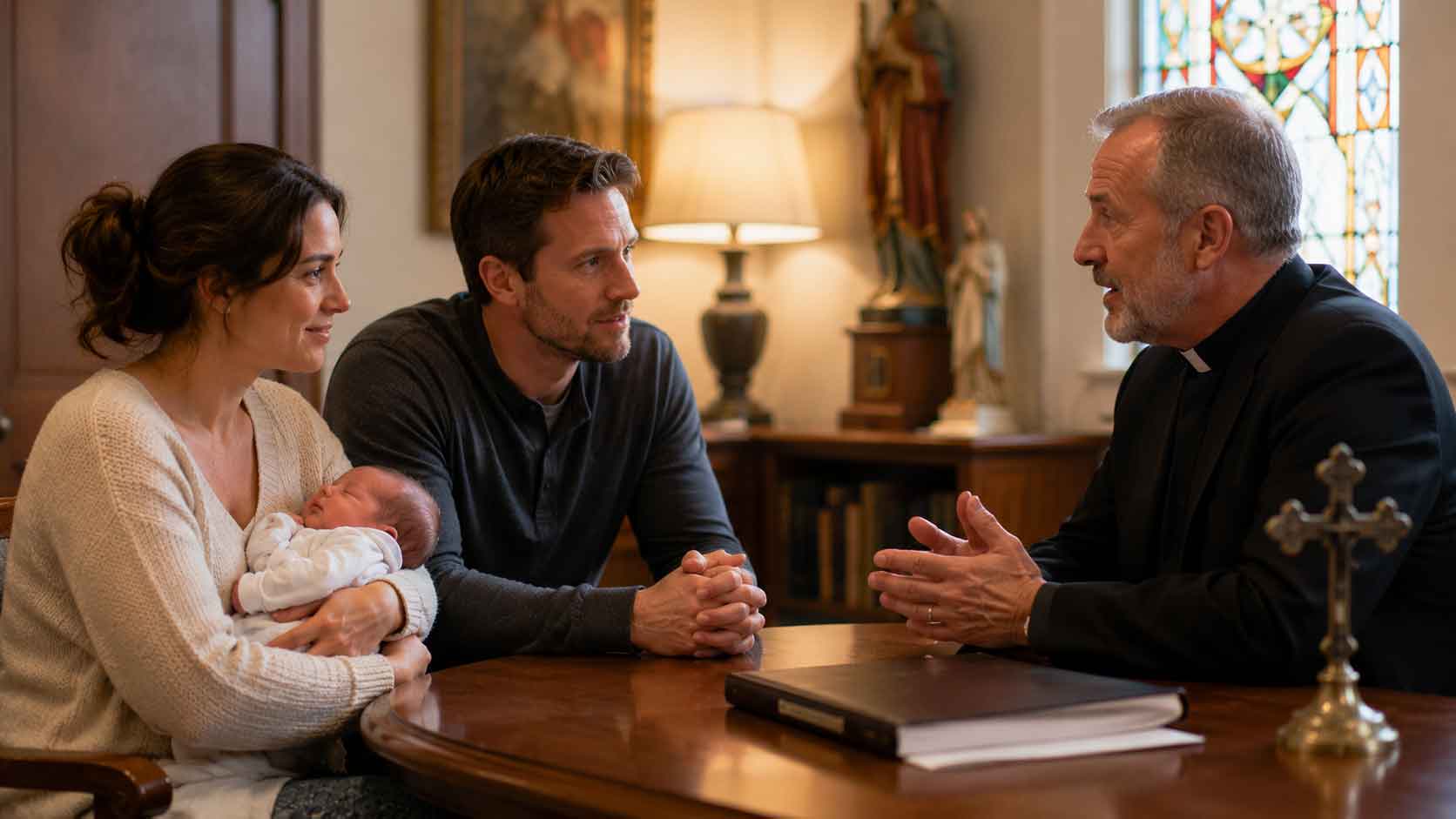
In a Catholic emergency Baptism, the essentials are straightforward. Any person may baptize in danger of death if they use real water, say “I baptize you in the name of the Father, and of the Son, and of the Holy Spirit,” and intend to do what the Church does. That simplicity is meant to help families act with peace and confidence in moments of real need.
After the emergency, contact the parish right away so the Baptism can be documented and any remaining rites can be supplied. For many families, knowing these basics in advance brings reassurance, especially during pregnancy, childbirth, NICU care, or other medical situations where quick answers may suddenly be needed.