


Baptism
Topics

- Online Catholic Baptism Preparation for Parents and Godparents
- Catholic Godparent Requirements: Who Can Be a Godparent?
- Infant Baptism Checklist – What You Need to Prepare for Your Child’s Baptism
- Baptism Symbols Explained – Meaning of Water, Oil, Candle, and White Garment
- Online Catholic Baptism Class – Prepare for Infant Baptism from Home
- Choosing Catholic Godparents: A Guide for Baptism and Confirmation
- Baptism Preparation Timeline: A Step-by-Step Guide for Families
- Emergency Baptism Questions: Catholic Answers for Parents and Families
- Catholic Baptism Certificate Requirements: What You Need & How to Request One
- What Happens During Catholic Baptism? A Step-by-Step Guide for Families
- Online Baptism Prep for Parishes – Flexible Catholic Formation for Parents and Godparents
- Baptism Prep Certificate – What It Is and When Your Parish May Require It
What Happens During Catholic Baptism? A Step-by-Step Guide for Families
Many parents, godparents, and guests want to know what happens during Catholic Baptism before the day arrives. Some are preparing for their child’s Baptism, while others are attending for the first time and simply want to understand the ceremony better. A Catholic Baptism is both beautiful and deeply meaningful, with each prayer, symbol, and action pointing to the grace of the sacrament.
Although parish customs may vary slightly, the order of Catholic Baptism is generally the same from one parish to another. The celebration usually includes a welcome, readings from Scripture, prayers, promises made by parents and godparents, Baptism with water in the name of the Trinity, anointing with holy oil, the white garment, and the lighting of the baptismal candle. This guide walks through those steps so families know what to expect.
The Welcome at the Church
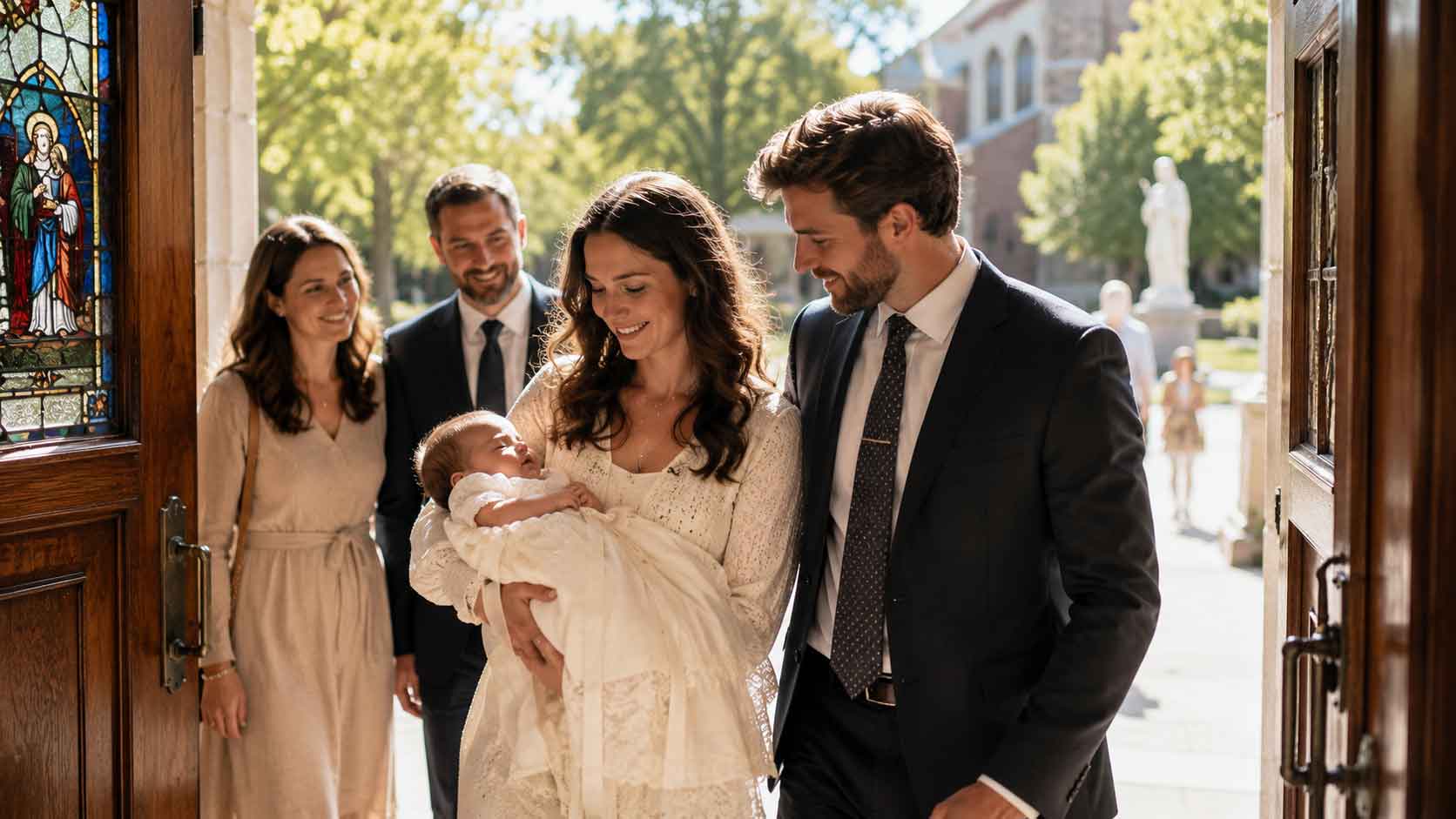
The Baptism ceremony often begins at the entrance of the church or near the baptismal font. The priest or deacon welcomes the parents, godparents, and child, and asks what name has been given to the child and what the family asks of the Church. This opening moment is simple, but it carries important meaning because it shows that the child is being received into the Christian community.
The minister may then ask the parents and godparents whether they understand their responsibility to raise the child in the Catholic faith. Their answer shows that Baptism is not only about the ceremony itself, but about the lifelong commitment to help the child grow in faith, prayer, and participation in the Church.
At this stage, the Sign of the Cross is traced on the child’s forehead. The parents and godparents are often invited to do the same. This marks the child as belonging to Christ and begins the visible journey of the sacrament.
The Liturgy of the Word
After the opening rite, the ceremony moves into Scripture readings and prayer. A reading from the Bible is proclaimed, and in many Baptisms there may also be a psalm, Gospel reading, and short homily from the priest or deacon. These readings help everyone present understand the meaning of Baptism in the light of God’s word.
The homily is usually brief and pastoral. It may explain the significance of Baptism, the role of the parents and godparents, and the grace the child is about to receive. For families who are new to the ritual, this is often one of the clearest moments of explanation in the ceremony.
Intercessions usually follow. These prayers ask God to bless the child, strengthen the parents and godparents, and guide the whole family in faith. In some celebrations, the Litany of the Saints may also be prayed, asking for the prayers of the saints for the child and family.
Prayer, Anointing, and Preparation
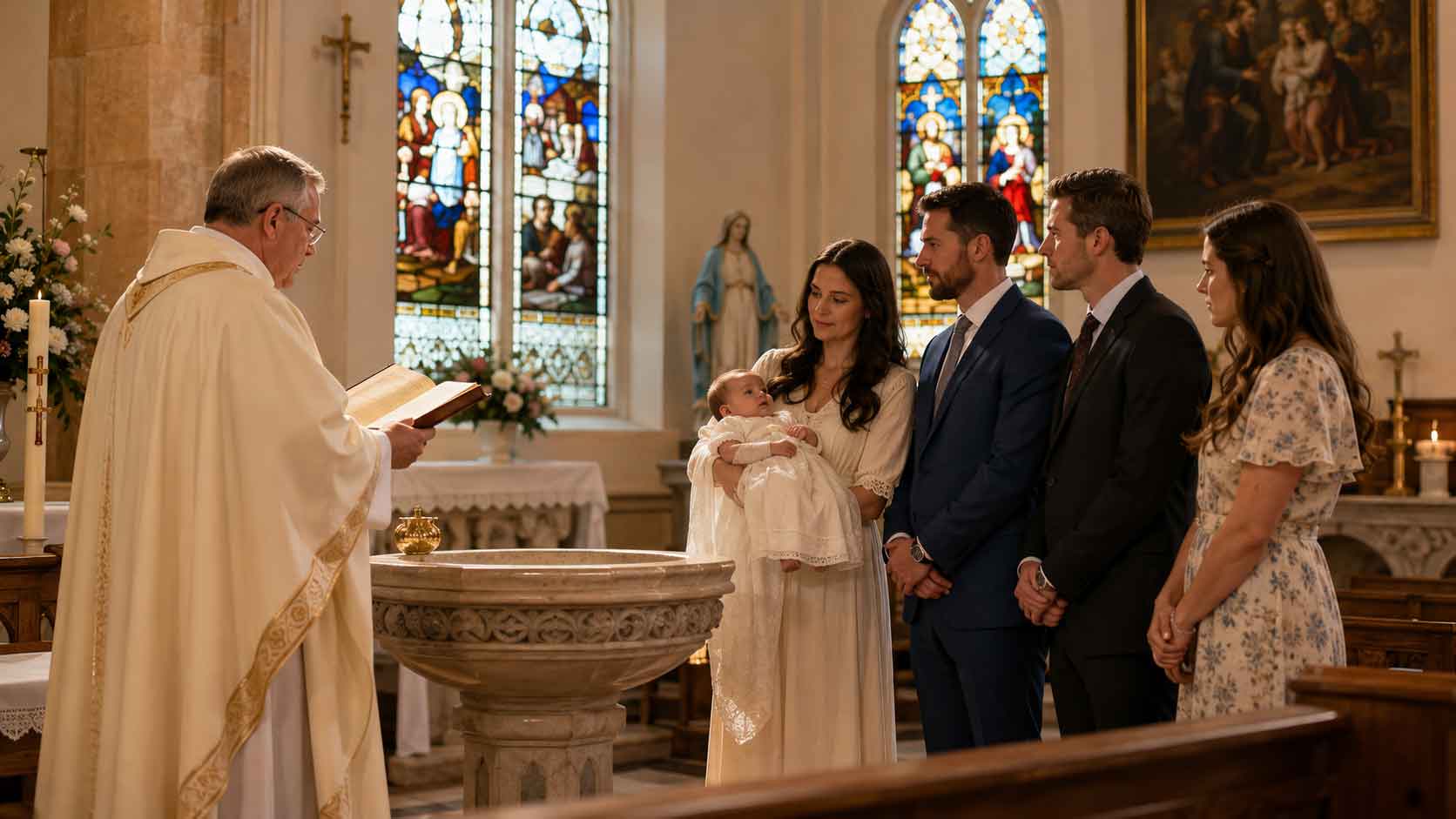
Before the water rite itself, the Church includes prayers of preparation. One of these prayers asks God to free the child from the power of sin and strengthen them with grace. This is sometimes followed by an anointing with the Oil of Catechumens, usually on the child’s chest.
This pre-baptismal anointing symbolizes strength, protection, and readiness for the Christian life. It reminds families that Baptism is not just a naming ceremony or family custom. It is the beginning of a real life in Christ, a life that will involve faith, prayer, and spiritual growth.
The water to be used for Baptism is then blessed if it has not already been blessed. The prayer over the water recalls the great saving events in the history of salvation and helps the congregation understand that this ordinary element is being used by God for something extraordinary.
The Baptismal Promises
Before the child is baptized, the parents and godparents are asked to reject sin and profess the faith of the Church. These promises are an important part of the ceremony because infants cannot yet speak for themselves, so the adults speak on their behalf and promise to help them grow into that faith.
The minister asks a series of questions, and the parents and godparents respond with phrases such as “I do.” These responses are not simply formal words. They express a real commitment to raise the child as a Catholic, to teach the faith, and to help the child follow Christ.
This part of the ceremony often stands out for families because it makes clear that Baptism is both a gift from God and a responsibility for those who love the child. It connects the sacrament to everyday family life after the ceremony has ended.
The Water Rite
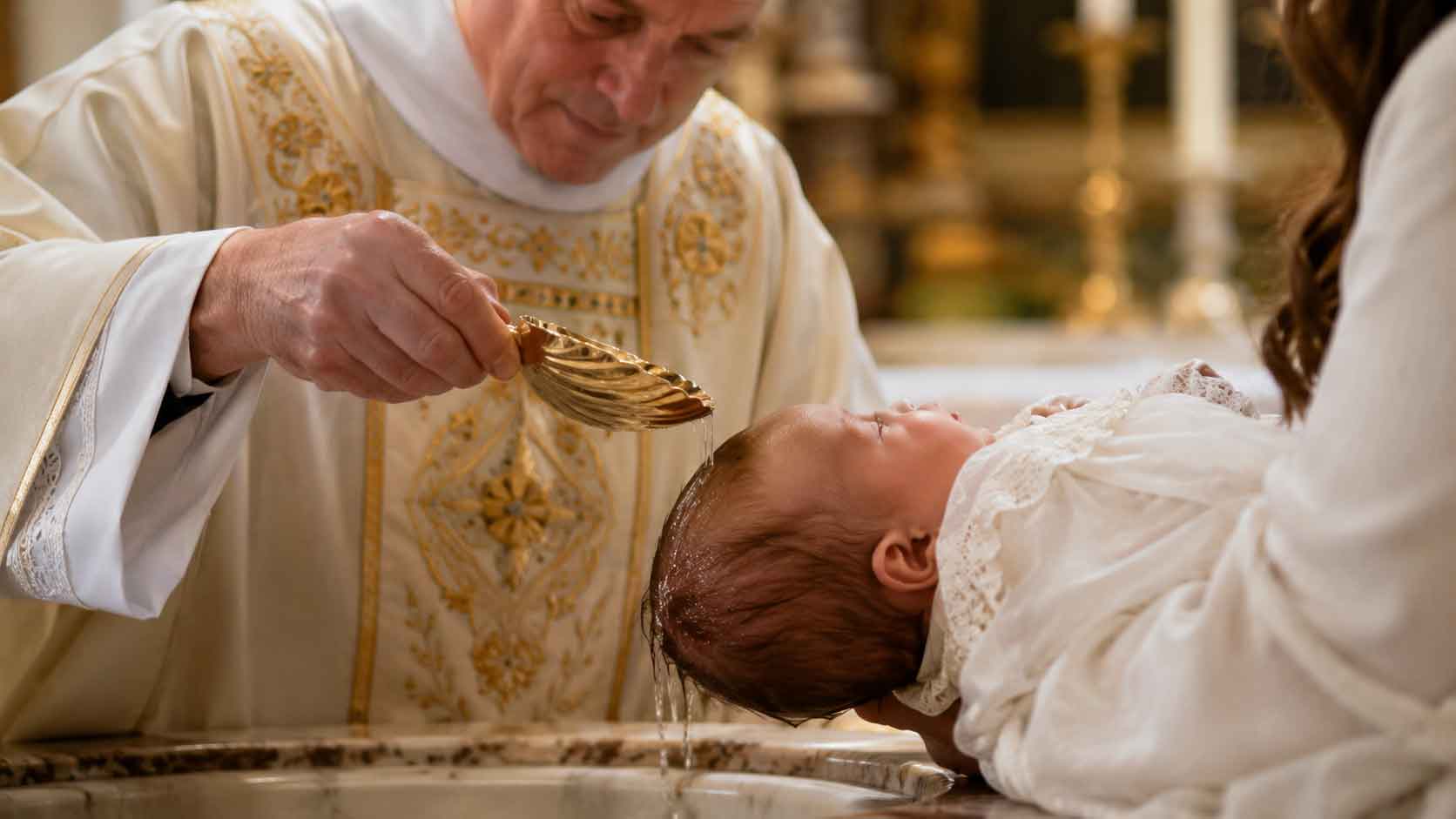
The central moment of Catholic Baptism is the pouring of water over the child’s head, or in some cases immersion in water. As this happens, the priest or deacon says: “I baptize you in the name of the Father, and of the Son, and of the Holy Spirit.” This is the heart of the sacrament.
The water signifies cleansing from sin and new life in Christ. Through this act, the Church teaches that the person is washed clean, receives sanctifying grace, and becomes a member of the Body of Christ. For infants, it also means freedom from original sin and entrance into the life of the Church.
This is often the most emotional part of the ceremony for families, because it is the moment when the sacrament is actually conferred. Everything else leads toward this point, and everything that follows helps explain and celebrate what has now taken place.
The Sacred Chrism, White Garment, and Candle
After the water rite, the child is anointed again, this time with Sacred Chrism on the crown of the head. Sacred Chrism is a perfumed oil blessed by the bishop. This anointing shows that the newly baptized person now shares in the life of Christ and belongs to him in a new and lasting way.
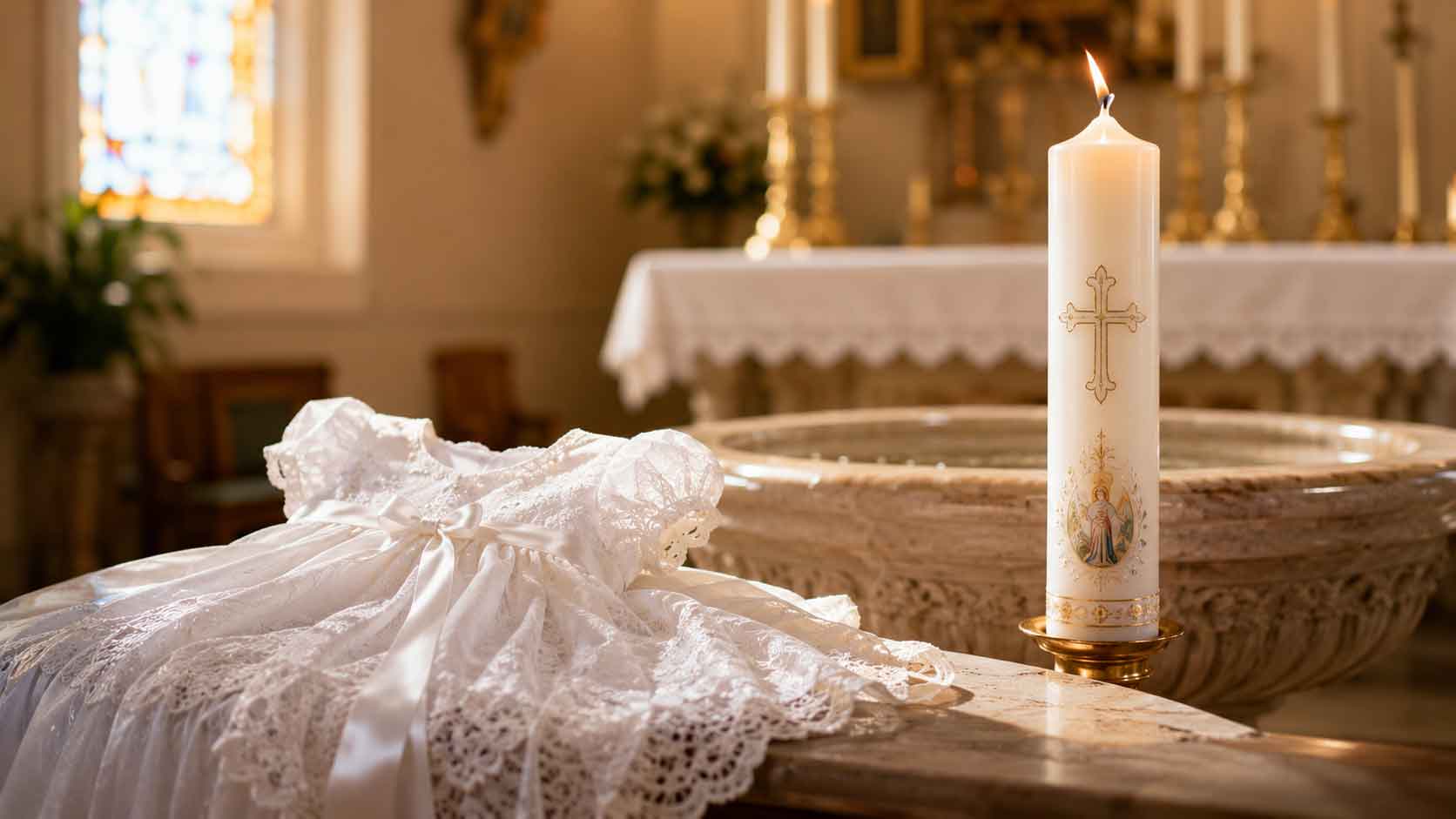
The child is then clothed in a white garment or presented with one. The white garment symbolizes purity, new life, and the dignity received in Baptism. It is a visible sign that the baptized person has “put on Christ” and is called to walk in his light.
Next, the baptismal candle is lit from the Paschal Candle. A parent or godparent usually receives the candle, and the minister speaks about receiving the light of Christ. This reminds the family that the child’s faith is meant to be kept alive through prayer, worship, and Christian example.
In some Baptisms, an additional optional rite called the Ephphetha prayer may be included. In this prayer, the minister touches the ears and mouth of the child and prays that the child may soon hear the word of God and profess the faith openly.
The Final Prayers and Blessing
After the main rites are completed, the ceremony moves toward its conclusion. The community often prays the Our Father together, and then the priest or deacon gives a special blessing. There may be blessings for the mother, the father, the child, and everyone gathered.
These concluding prayers are a reminder that Baptism joins the child not only to Christ but also to the Church community. The family leaves not simply with photographs and keepsakes, but with a new responsibility to help the child live as a Christian.
If the Baptism takes place during Mass, the rite is woven into the liturgy. If it takes place outside of Mass, it is usually shorter but still follows the same essential structure. In either case, the sacrament itself remains the same.
What Guests Should Expect
Guests at a Catholic Baptism should expect a prayerful and structured ceremony. Some Baptisms are quiet and intimate, while others include a larger group of family and friends. The length of the ceremony depends on whether it takes place during Mass, but many stand-alone Baptisms are relatively brief.
Non-Catholic guests are warmly welcome to attend and pray with the family. If the Baptism takes place during Mass, those who are not prepared to receive Holy Communion simply remain in their place during Communion. Families often appreciate knowing this in advance so guests can feel comfortable and at ease.
It is also helpful for guests to know that photography rules vary by parish. Some churches allow many photos, while others prefer that pictures be taken discreetly or after the ceremony has ended.
Why Each Step Matters
Every part of the Catholic Baptism rite has meaning. The welcome shows that the child is received by the Church. The readings and prayers explain the grace of the sacrament. The promises remind parents and godparents of their responsibility. The water brings the sacrament into effect. The oil, white garment, and candle reveal what God has done invisibly in the soul.
When families understand what happens during Catholic Baptism, the ceremony becomes much more than a family event. It becomes easier to pray through each moment, respond with confidence, and appreciate the deep spiritual beauty of the sacrament.
For parents preparing for Baptism, this understanding can also make the day more peaceful. Knowing the order of the rite helps families focus less on uncertainty and more on the joy of welcoming their child into the life of the Church.